





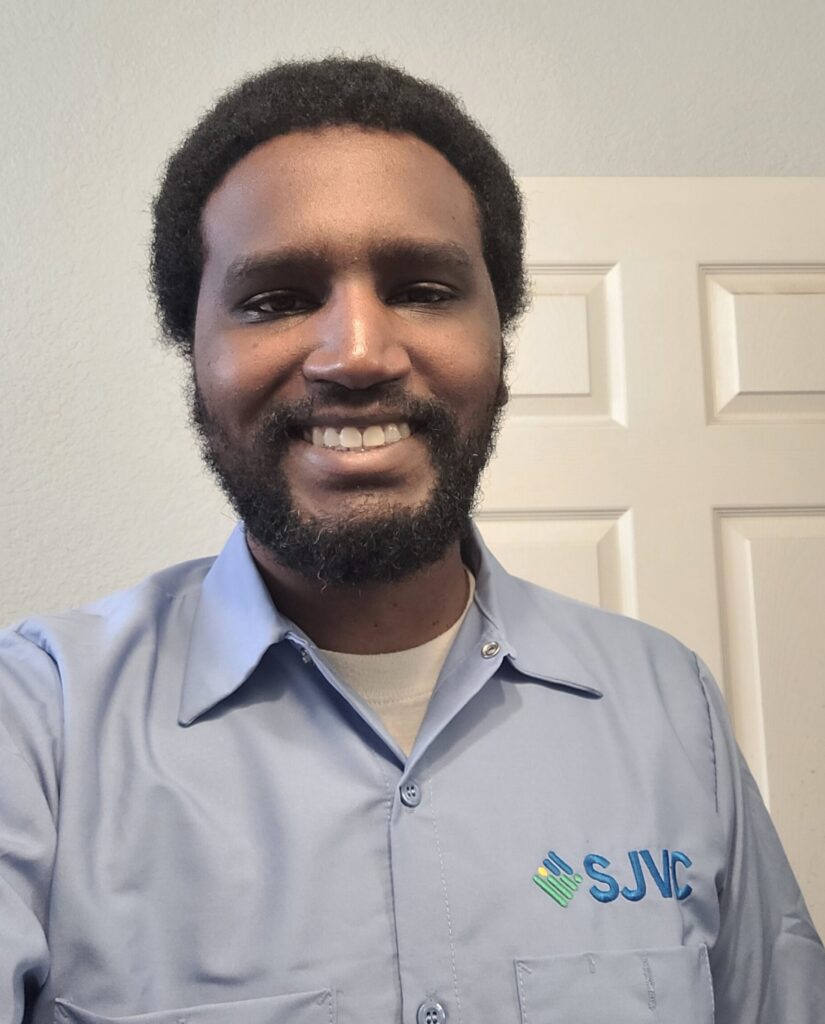
 At 27-years old, Michael had done his share of Door-Dash, box store deliveries and other wheels-for-hire businesses. No job security, advancement opportunities or predictable income. He was ready to direct his energy toward a solid career…something with steady work, stable income and an optimistic future.
A cousin who had electrical training suggested that Michael check out Heating, Ventilation, Air Conditioning & Refrigeration (HVAC-R) training. “They make good money,” he had told him. That sounded good. Real good.
What was your first step in the HVAC-R career direction?
I started my HVAC-R programs search online, and SJVC was close to where I live, so I looked there first. I sent an online inquiry and they called me immediately. I made an appointment for a campus tour.
Was the tour helpful?
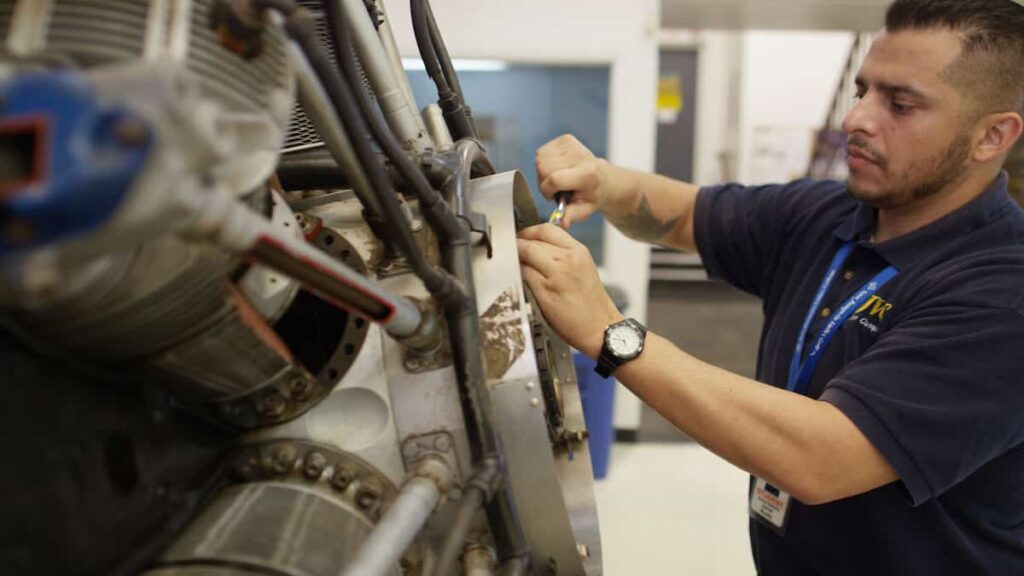
I didn’t recognize some of the equipment in the HVAC-R program, like freezers and ice machines (in addition to expected A/C units). I didn’t realize they would teach me how all of this stuff worked. I thought it would be pretty neat to have all this knowledge. I’d always been a knowledge-sponge and knew pretty intuitively that this was a fit for me.
The whole process from online inquiry to tour then sitting in the classroom was probably 3-weeks.
Any big surprises in the HVAC-R program?
The breadth of what a HVAC-R tech would be able to work on. I didn’t have any mechanical knowledge base, so I was learning a lot of new concepts. But it was manageable. I got more comfortable when I realized there wasn’t anything I couldn’t learn.
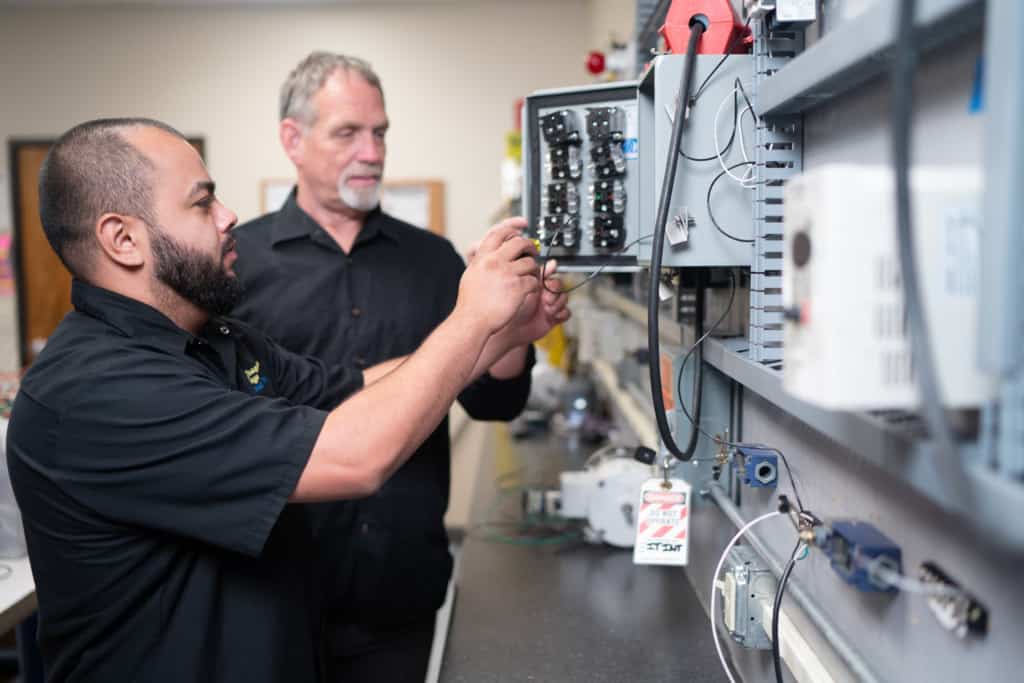
The class size was pretty small, so you got to have more time to learn something on a machine before handing it off to the next guy.
What were your struggles?
There were points when I wasn’t absorbing as much knowledge as I wanted to and my hand strength wasn’t the greatest (repairing wiring). But I did get better with each attempt. And if I wasn’t getting something immediately, I’d ask questions and see how our teacher would do it.
Did you have the instructor support you needed?
The first thing both instructors did was put their name and phone number on the board with an open invitation to reach out with any questions or trouble submitting assignments, etc. There were a couple of points I wasn’t absorbing as much as I wanted, and I felt free to ask questions.
All the instructors had great knowledge from working in the field.
What is the HVAC-R program’s scope of study?
There’s the introductory side of split units that you would see at someone’s house, rooftop units in small commercial buildings and on the advance side, high efficiency split units, as well as walk-in freezers and ice machines. We work on everything from pretty standard to decently complicated.
HVAC-R instructor, Craig Chambers, responds: “Michael has always shown exceptional professionalism and has even come in after graduating to help with class projects, completing the ICE machine and assisting with the wiring. He participates in SJVC’s Open Trades Night, where we showcase our skills and knowledge to potential employers and contractors.”
What kinds of equipment did you work on?
We worked on standard to decently complicated units. They take you step-by-step on technical and safety mechanics. They teach us to work at a higher degree of efficiency, without worry.
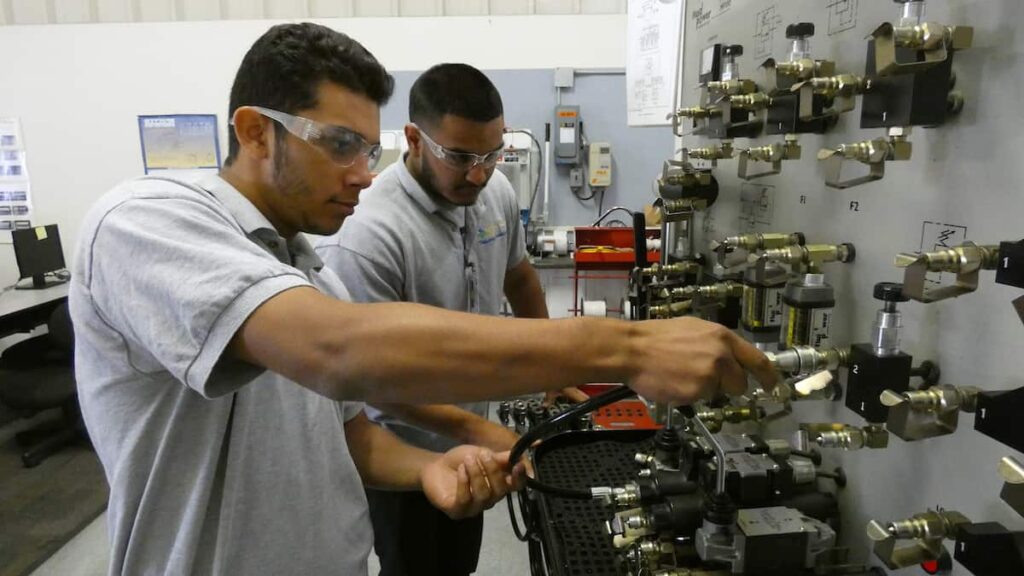
Hands-on experience is very important in this program. We balanced learning (from text) with hands-on practice in the lab where we worked on industrial size units. We split units you would see at someone’s house, rooftop units and small commercial buildings.
What was a HVAC-R program highlight?
The thing I enjoyed the most was when a unit wouldn’t come on and I was the one (in class) who had to fix it. It was a hit of dopamine for me. And, because our class was small, we had more hands-on time before having to hand-off the challenge to the next guy.
Did you have family support during your career training focus?
My mom and stepfather (Lisa and Ricard) have always been supportive – even if I’d decided to become a professional clown, they would have been there 100%. They have a high degree of confidence in me and know that this is something I’m capable of.
Any regrets about getting into this field?
I would have liked to have gotten into this field sooner. My advice to others would be, the best time to do start something like this…is now. Get out of your hourly wage cycle. Specialize in something that not many other people can do.
What is your new career outlook?
I’m very confident because we’re in the business of keeping things cool – and summertime is when more jobs open up…especially in California where temps are 100+ degrees.
Commercial work is year-round, and I’d like to work for a Walmart or Costco because of job security and caliber of units they would have.
Is there a higher level of professionalism you are considering?
I just got my certification, but I’ll probably go back and get my associate’s degree at SJVC in HVAC-R. I’m definitely getting deeper into this industry, because experience is paramount.
Right now, I would just like stable work to build my experience. SJVC’s Career Services department is helping me quite a bit. Summer temps are rising…and I’m very confident the jobs will pop up with it.