








While the two terms are often used interchangeably, maintenance technicians and mechanics have different responsibilities depending on the industry they work in and their employers. Here’s what you need to know about the maintenance technician vs mechanic debate, and what differentiates the two careers.
Maintenance Technician vs. Mechanic: The Core Difference
The difference between maintenance technicians and mechanics often comes down to the level of repair work expected of the job. The BLS states that machinery maintenance workers, or mechanics, perform basic maintenance and repairs. In contrast, technicians and industrial maintenance technicians may perform more advanced tasks, such as diagnostics, testing, and working with advanced technology systems. (1)

Differences Between Maintenance Technicians and Mechanics (1)
|
Mechanic |
Maintenance Technician |
|
|---|---|---|
|
Responsibilities: |
Focuses on repairs and maintenance. |
Responsible for repairs and maintenance, but may also focus on diagnostics, testing, and troubleshooting. |
|
Works with: |
Tools and equipment. |
Tools, equipment, and technology systems. |
What Is a Maintenance Mechanic?
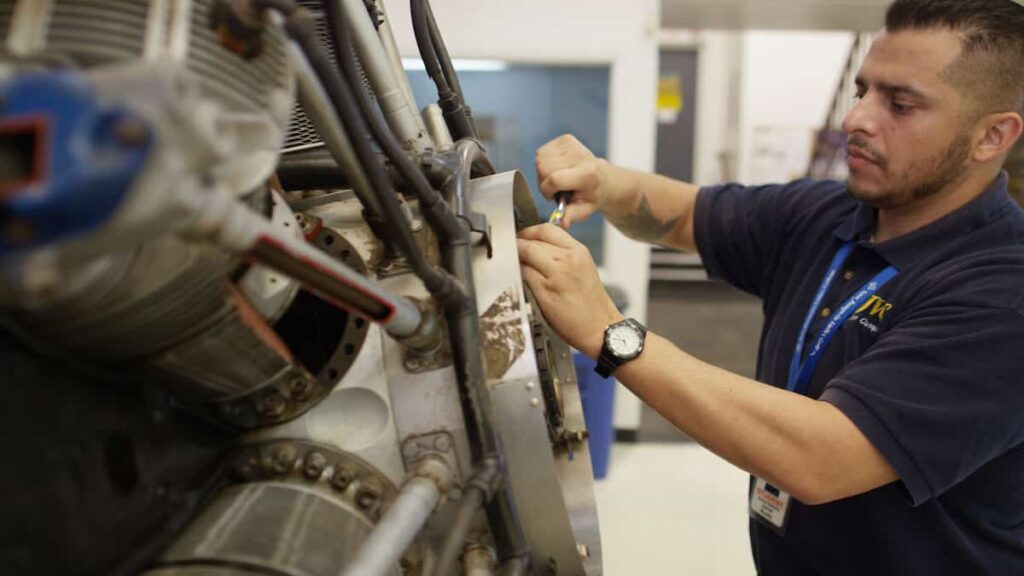
A maintenance mechanic, or industrial machinery mechanic, repairs, installs, and maintains factory and industrial machinery. They keep equipment in working order, detecting and correcting minor errors before problems cause damage. (1)
Why Are Mechanics Sometimes Called Technicians?
The role of a maintenance mechanic has evolved alongside advances in technology. Mechanics may need to use computerized diagnostic systems and vibration analysis techniques to identify issues in addition to traditional mechanical work.
What Is a Maintenance Technician?
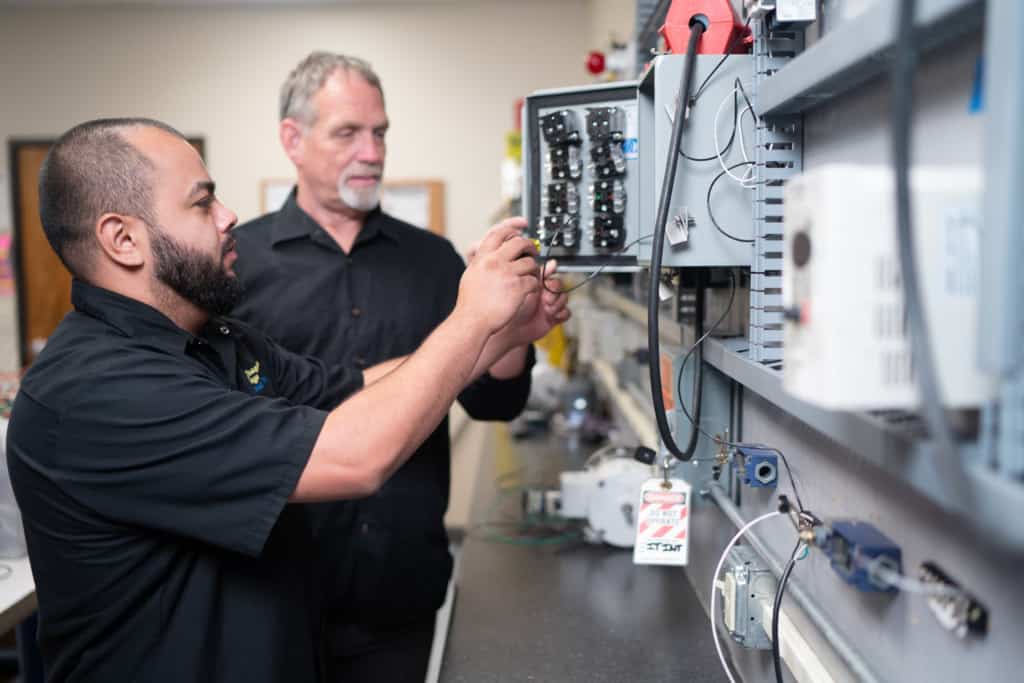
A maintenance technician performs the same tasks as a maintenance mechanic, but with more of a focus on advanced mechanical, electrical, and automated systems. Maintenance technicians are more likely to work with advanced diagnostic tools, but the exact nature of their responsibilities — and whether they’re called a mechanic or a technician — varies depending on their industry and employer.
Is a Maintenance Technician a Higher-Level Position Than a Mechanic?
Don’t think of the maintenance mechanic vs. maintenance technician debate as hierarchical. They’re two different job titles whose responsibilities frequently overlap. A mechanic in one industry may perform the same tasks as a technician in another.
Which Career Path Is Right for You?
If you enjoy practical, hands-on opportunities to repair and maintain equipment using just your tools, hands, and knowledge, the role of a maintenance mechanic may be right for you. If you’re interested in computerized systems and advanced diagnostics, a maintenance technician may be a better fit. Remember, however, that the two terms are often used interchangeably. A “mechanic” position may require an understanding of computerized systems, while a “technician” position may include mostly manual maintenance responsibilities. Find out more with our Maintenance Technician Career Guide.
Train for a Career in Maintenance Technology With SJVC
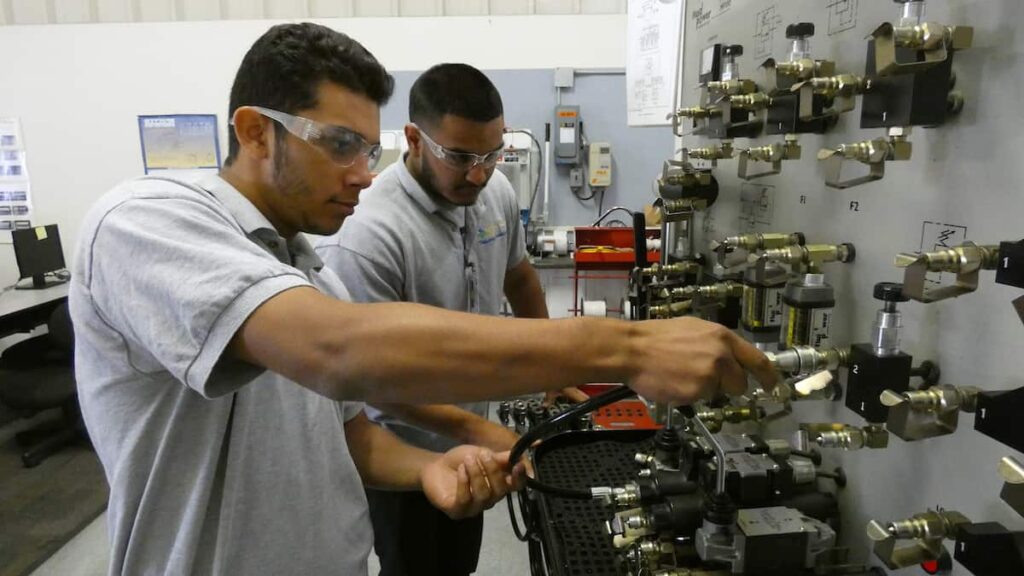
The SJVC Maintenance Technician program helps students develop practical skills to maintain and troubleshoot industrial systems and equipment, with a focus on hands-on, real-world applications. Coursework covers the installation, maintenance, and repair of mechanical and electrical systems in industrial settings. Students can earn a Certificate of Completion in as few as 7 months, making the program ideal for those seeking a fast track into the workforce.
References
- Bureau of Labor Statistics, U.S. Department of Labor, Occupational Outlook Handbook, Industrial Machinery Mechanics, Machinery Maintenance Workers, and Millwrights, at https://www.bls.gov/ooh/installation-maintenance-and-repair/industrial-machinery-mechanics-and-maintenance-workers-and-millwrights.htm (visited May 30, 2026). a b c