








Industrial Maintenance Technician Career Guide
What is a maintenance technician? Maintenance technicians are skilled professionals who inspect, maintain, and repair equipment and systems to keep operations running efficiently. They are often grouped with industrial machinery mechanics and related roles, working on machinery used across a range of industries, from electronics to manufacturing and industrial equipment. (1)
Industrial maintenance technology has its basis in engineering, and maintenance technicians often work with hydraulic, pneumatic, and electrical systems, as well as computerized equipment. (2)
If you’re wondering how to become a maintenance technician, the process typically involves a combination of education, technical training, and hands-on experience.
What Does a Maintenance Technician Do?
Maintenance technicians help keep equipment, systems, and facilities running efficiently. They inspect, maintain, and repair machinery to support daily operations across a variety of industries. (1)
Common Responsibilities
Day-to-day tasks for a maintenance technician may include: (1)
- Inspecting equipment to identify wear, damage, or performance issues
- Performing routine maintenance such as cleaning, lubricating, and calibrating machinery
- Running diagnostic tests to detect and troubleshoot mechanical or electrical problems
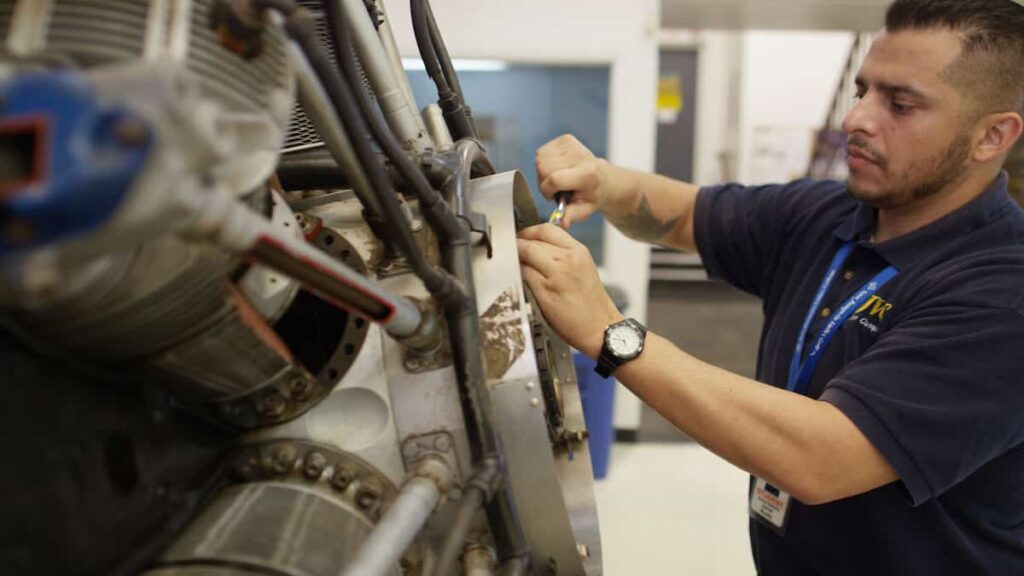
- Disassembling and reassembling equipment for repairs or part replacement
- Repairing or replacing malfunctioning components
- Testing machinery to confirm proper operation after maintenance or repairs
- Reading and interpreting technical manuals, schematics, and equipment specifications
- Following preventive maintenance schedules to reduce downtime
- Moving or repositioning equipment as needed within a facility
How to Become a Maintenance Technician
Becoming a maintenance technician typically involves building foundational knowledge, developing technical skills, and gaining hands-on experience. Understanding maintenance technician education and job requirements can help you plan your path.
Step 1: Earn a High School Diploma or Equivalent
Most employers require a high school diploma or equivalent. (1) Foundational knowledge in math, basic mechanics, and problem-solving can help prepare you for technical training and entry-level responsibilities.
Step 2: Complete a Maintenance Technician Training Program
Some individuals choose to pursue formal training to build job-ready skills. Industrial maintenance technician training programs, such as SJVC’s Maintenance Technician program, are designed to introduce key concepts and provide structured, hands-on learning.
Coursework may cover areas such as: (3)
- Electrical systems and controls
- Mechanical components and systems
- Blueprint reading and schematics
- Industrial safety practices
- Basic welding and fabrication
- Troubleshooting techniques
Step 3: Learn Core Mechanical & Electrical Systems
Maintenance technicians work with a range of systems in real-world environments. Developing a working understanding of both mechanical and electrical components is an important part of the role.
This may include:
- Understanding how machinery operates and identifying performance issues
- Working with motors, conveyors, and automated systems
- Reading technical diagrams to support troubleshooting
- Applying safety procedures when handling equipment and tools
These skills are often introduced during training and continue to develop with experience on the job.
Step 4: Gain Hands-On Experience
Hands-on experience is a key part of becoming a maintenance technician. This can begin in a training program through lab work or simulations and continue in entry-level roles after graduation.
New technicians may:
- Perform routine maintenance tasks under supervision
- Assist with equipment repairs and diagnostics
- Learn workplace processes and safety standards
- Build confidence working with tools and machinery
After gaining experience, many individuals continue building their skills while entering the workforce or pursuing additional training.
How Long Does It Take to Become a Maintenance Technician?
This answer can vary depending on your education path and how you gain experience. Many people enter the field within months to a couple of years, combining training with hands-on learning.
Training Program Timeline
If you choose a formal training program, the timeline depends on the type of credential:
- Certificate programs: May be completed in as few as about 7 months (3)
- Associate degree programs: SJVC’s Maintenance Technician program can be completed in as few as 14 months (3)
Some employers may prefer additional training or certifications related to specific systems or equipment. Certifications can demonstrate knowledge of electrical systems, safety standards, or specialized machinery and may support career development.
Training programs are designed to introduce core mechanical and electrical concepts, along with practical lab experience that can help prepare students for entry-level roles.
On-the-Job Training Timeline
After completing training, or sometimes in place of formal education, new maintenance technicians typically continue learning on the job.
According to the U.S. Bureau of Labor Statistics, industrial machinery mechanics and maintenance workers often receive a year or more of on-the-job training. (1)
What Do You Learn in a Maintenance Technician Program?
Maintenance technician training programs are designed to help students build foundational knowledge and practical skills used in industrial and facility settings. These programs support common maintenance technician education requirements by focusing on both mechanical and electrical systems, along with real-world troubleshooting techniques.
Core Technical Skills
Students are typically introduced to key concepts that support equipment maintenance and repair across a range of environments. These may include: (3)
- Industrial electricity
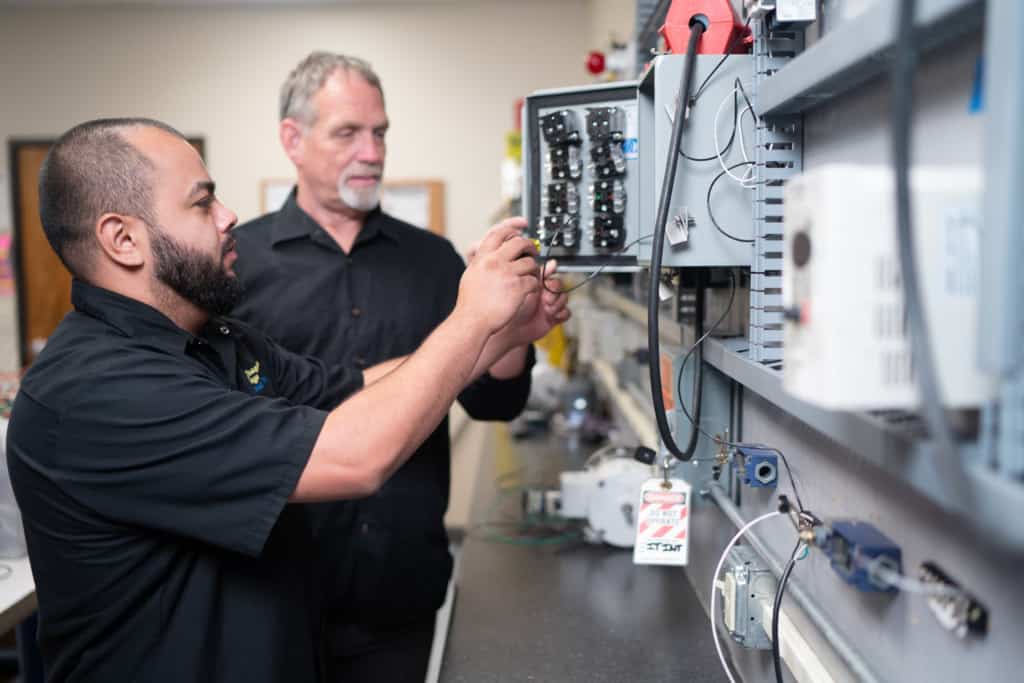
- Programmable Logic Controllers (PLCs)
- Power transmission systems
- Hydraulics and fluid systems
- Blueprint reading and schematics
- Industrial safety practices
Hands-On Training
Hands-on training may involve:
- Working with tools and equipment in lab environments
- Practicing inspection, maintenance, and repair techniques
- Running diagnostic tests
- Simulating real-world scenarios
This combination of technical instruction and applied learning can help students develop confidence working with equipment and systems before entering the field.
Maintenance Technician Job Outlook
Maintenance technicians play an important role in keeping equipment, systems, and facilities operating efficiently across many industries.
According to the U.S. Bureau of Labor Statistics, employment for industrial machinery mechanics looks bright. (1)
Where Do Maintenance Technicians Work?
Maintenance technicians work in a wide range of industries that rely on equipment, machinery, and facility systems to operate efficiently. Because machines are used across many sectors, opportunities can be found in diverse work environments.
Common Industries for Maintenance Technicians
- Manufacturing: Supporting production lines by maintaining and repairing machinery used to produce goods, from small components to large equipment
- Construction: Maintaining equipment and tools used on job sites
- Energy and utilities: Working with systems used in power generation, including electrical, gas, and other energy infrastructure
- Food production and processing: Maintaining equipment used to package, process, and prepare food products for distribution
- Electronics manufacturing and technology: Servicing machinery used to manufacture electronic components and devices
- Aviation and transportation equipment: Maintaining equipment used in the production or servicing of aircraft and transportation systems
- Warehousing and distribution: Keeping conveyor systems, forklifts, and automated equipment operating in logistics and distribution centers
Work Environments
Depending on the industry, maintenance technicians may work in:
- Manufacturing plants or production facilities
- Warehouses and distribution centers
- Commercial or industrial buildings
- Outdoor job sites or construction environments
Common Physical Requirements
- Standing or walking for extended periods
- Lifting tools, parts, or equipment
- Working in confined or elevated spaces
- Using hand and power tools safely (2)
Skills for Maintenance Technicians
Maintenance technicians often rely on a combination of technical and soft skills to perform their work effectively, including: (2)
- Attention to detail: Monitoring equipment performance and identifying irregularities
- Problem-solving: Diagnosing issues and determining effective repair solutions
- Time management: Prioritizing tasks and responding to urgent maintenance needs
- Communication: Clearly documenting repairs and coordinating with team members
- Technical literacy: Using digital systems for maintenance logs, reporting, and tracking
- Proactive thinking: Performing preventive maintenance and anticipating potential issues
- Teamwork: Collaborating with operators, supervisors, and other technicians
Is Being a Maintenance Technician a Good Career?
A maintenance technician career can be a practical option for individuals who enjoy working with tools, solving problems, and keeping systems running smoothly.
This type of work often involves a mix of routine maintenance and troubleshooting, making it well-suited for those who prefer hands-on tasks and technical challenges.
Some factors people consider when exploring this path include:
- Interest in mechanical or electrical systems
- Preference for active, hands-on work environments
- Ability to problem-solve and think critically
- Willingness to continue learning as technology evolves
Because equipment and systems are used across many industries, maintenance skills can be applied in different settings, from manufacturing and logistics to facilities management.
Start Training for a Maintenance Technician Career at SJVC
If you’re interested in building hands-on skills and preparing for entry-level work in maintenance, exploring a formal training program can be a helpful next step.
San Joaquin Valley College (SJVC) offers a Maintenance Technician program designed to introduce students to industrial systems, equipment, and troubleshooting techniques. (3)
Students may have the option to choose from different training paths, including:
- A certificate program that can be completed in as few as about 7 months (3)
SJVC offers this program at several campus locations, including:
To learn more about program details and course content, visit the SJVC Maintenance Technician program page.
For important information about educational debt, earnings, and completion rates, visit the Admissions page.
Maintenance Technician Program FAQs
-
Getting started typically involves earning a high school diploma or equivalent, followed by building technical skills through training or hands-on experience. (1)
-
The level of difficulty can vary depending on your background and experience. The role requires learning technical concepts, working with tools and equipment, and developing problem-solving skills. (2)
-
A degree is not always required to get started as a maintenance technician. (1) However, understanding maintenance technician education requirements can help you decide whether a certificate or associate degree program aligns with your goals.
-
Maintenance technicians use a variety of tools depending on the systems they work with, including hand tools, power tools, diagnostic equipment, and measuring devices. (2)
References:
- U.S. Bureau of Labor Statistics. “Industrial Machinery Mechanics, Machinery Maintenance Workers, and Millwrights.”
https://www.bls.gov/ooh/installation-maintenance-and-repair/industrial-machinery-mechanics-and-maintenance-workers-and-millwrights.htm - O*NET OnLine. “Industrial Machinery Mechanics.” https://www.onetonline.org/link/summary/49-9041.00
- San Joaquin Valley College. “SJVC College Catalog.” https://www.sjvc.edu/admissions/catalog/
Updated on:
May 18th, 2026
Want to Learn More?
Request Information
All fields using an asterik (*) are required.
Our RN to BSN program is a Bachelors degree completion option for Registered Nurses.