
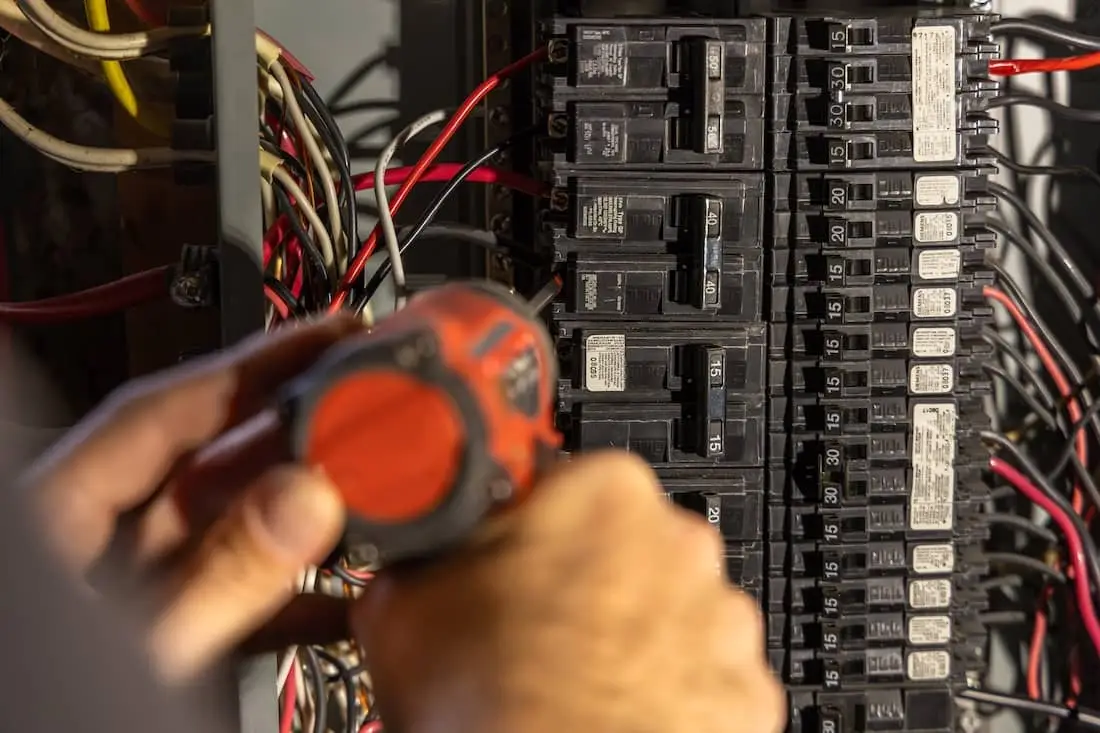
 Our modern lifestyles rely on electricity, which powers everything from our kitchen appliances to our mobile devices. This isn’t just a matter of convenience or even entertainment — we expect that electricity will not only be consistently available, but will also remain safe to use.
Wiring errors could have a devastating impact, after all, leading to electric shock or deadly house fires. Therein lies the need for strict standards and protocols that safeguard residents, electrical technicians and entire communities.
These guidelines are complex by nature, and the reality is, not just anybody can learn how to wire a house. It takes extensive electrical training to master the art and science of safe residential wiring.
Below, we’ll delve into the basics of electrical wiring in homes. We’ll explore the essential safety knowledge electricians and electrical technicians require, emphasizing how adhering to codes and industry best practices safeguards others.
The Difference Between Code Compliance and Professional Excellence
Code compliance helps electricians and electrical technicians abide by strict wiring standards implemented at the state level or by local jurisdictions. Compliance-focused professionals take the steps needed to avoid various hazards along with legal liability.
This is a fundamental element of electrical wiring, but it does not necessarily go far enough. Electricians and electrical technicians who prioritize professional excellence go above and beyond these minimum requirements, demonstrating a clear commitment to safety and quality.
What Are Residential Wiring Standards?
Residential wiring standards include a wide range of rules or regulations that determine how home-based electrical systems should be designed and maintained. These standards are meant to keep residents safe by limiting the potential for shocks or electrical fires.
While wiring standards can look different from one location to the next, these are generally defined in the United States by the National Electrical Code (NEC).[1] Also known as NFPA (National Fire Protection Association) 70, this offers a standardized source that electricians and electrical technicians can rely on for detailed information surrounding safe installation and maintenance practices.
Residential Wiring Best Practices
While NEC offers valuable insight into safety in electrical wiring, electricians are also guided by industry best practices. These address not only safety concerns, but also, practical challenges that may otherwise stand in the way of installing and maintaining reliable electrical systems.
Plan for Future Capacity
Future-proofing acknowledges that homeowners’ electrical needs may change over time. This calls for a forward-thinking approach. This could involve the strategic addition of extra outlets, along with a subpanel in detached spaces such as garages. Electricians may also opt to keep extra space open within breaker boxes, offering the flexibility to address future electrical needs.
Meticulous Labeling and Organization
It can be easy for even the most skilled and experienced electricians to get lost in a complex web of wires or breaker connections, especially when dealing with legacy wiring. Precise labeling limits confusion by identifying which rooms of the house are powered by each breaker. This minimizes the need to flip every breaker in the box in the event of a power surge.[2]
Ensure Proper Grounding
The NEC establishes minimum requirements for grounding in-home electrical panels. Failing to abide by these codes could lead to dangerous electrical hazards in the future, and legal action if anyone outside the home is injured due to a lack of up-to-code grounding.[3]
Safe grounding solutions can be implemented under the strict guidance of the NEC. Familiarity with Article 250, in particular, should promote proper grounding, with the NEC specifically calling for “electrical system grounding, electrical equipment grounding, electrical equipment bonding, and bonding of electrically conductive materials.”[4]
Select High-Quality Materials
Copper has become the standard wire for home electrical wiring, and for good reason. Copper’s high conductivity — coupled with its natural corrosion resistance and strong tensile strength — place it far ahead of aluminum alternatives.
Material selection should also be top of mind for outlets and breakers. Brass, bronze and copper promise solid performance (and the ability to resist corrosion) for terminals, while wall plates may be constructed of stainless steel or thermoplastic.
Common Home Wiring Mistakes to Avoid
From poor planning to tight deadlines, many circumstances can leave electrical professionals vulnerable to wiring mistakes.[5] When these occur in the home, they can prove incredibly dangerous for residents, potentially leading to shocks or even fires. To that end, electricians must take extra care to avoid these common concerns:
Overloading Circuits
When wiring systems are pushed beyond their capacity, circuits can overload.[6] While this often occurs because too many devices are plugged into a single circuit, it may also reflect poor distribution of the electrical load.
Electrical professionals can prevent this by carefully calculating electrical demands within various rooms or zones. These insights enable electricians to select the right circuits based on the situation at hand. Also critical is distributing appliances across separate circuits.
Mismatched Breaker and Wire Sizes
It’s important to know the amp rating on every circuit breaker installed within residential settings. This rating must then match the ratings for the respective wires. Keep in mind that each gauge of wire features its own amp rating. A common combination of wire size and circuit breaker involves 15-amp breakers for general use 14 gauge wires.
If a breaker is too large for the wire, it could cause an overload. Conversely, if the wire is too large for the breaker, inefficiency is likely. Finding the right middle ground involves pairing wire gauges and circuit breakers according to strict NEC standards.[7]
Unprotected Connections Outside of Junction Boxes
A key rule of thumb for residential wiring is that connections should never be left exposed outside of junction boxes. These live wires and connections pose an electrocution threat and can also lead to electrical fires if they come into contact with various items within the home. Junction boxes provide protective barriers, complete with secure covers. Cable clamps offer further protection.[8]
Improperly Mixing Voltage Wires
The low-voltage wires that run throughout today’s homes should never share the same conduit as their high-voltage counterparts. Failing to do so could lead to electrical fires, shocks or signal interference. If the insulation should fail or degrade on a high-voltage wire, it could energize any low-voltage wires that are in direct contact with it.
The Home Electrical Wire Color Code
The basics of electrical writing in homes dictate that specific colors are used to identify in-home wiring.[9] These colors make it easier to identify which wires are consistently live or sometimes live, along with neutral and ground wires.
Black and red are used for consistently live wires, which power light fixtures, appliances and other household items. Blue and yellow wires are also live. These are commonly used in setups where multiple switches control a single light source. White and gray wires carry power back to the electrical panel and are connected to a silver screw terminal to complete a grounded circuit.
Neutral wires should always be considered live, especially as they can be repurposed as hot wires for switches. In these situations, the white wire will be marked with red or black electrical tape to indicate it is live. Finally, green wires act as a grounding path, allowing the electricity to safely exit the system in the event of a fault.
What Type of Electrical Wire Is Used in Homes?
Commonly referred to as Romex, non-metallic (NM) sheathed cables feature wiring housed within color-coded insulation.[10] These durable cables often include black and white wires, along with uncovered copper grounding wire. For areas where wiring will be exposed, solid metal-clad cable is used.
These wires are most often found in garages, unfinished basements or other spaces in which it could be difficult to conceal wiring. Metal-clad cables are wrapped in flexible aluminum that serves as a ground. These may rely on a green ground wire for added safety.
How to Choose the Best Electric Wire for Homes
No electrical wire automatically qualifies as the “best” across all settings or situations. This depends largely on the application, as lower power needs will require a different wiring plan than a more elaborate, high-power setup.
Bedrooms and living spaces, for instance, may require wiring rated at 15 to 20 amps, while large appliances (such as washing machines, hot water heaters and air conditioners) might demand wiring rated at 30 amps and above.
How SJVC’s Program Builds Electrical Knowledge
Discover more about safe residential electrical wiring with SJVC’s Electrical Technology program. This program provides training for aspiring electricians and electrical technicians, complete with an overview of National Electrical Code standards.
Blending theoretical knowledge with practical skills, SJVC’s program provides a pathway to a career in electrical technology. Key elements of our career-driven program include:
Foundational Knowledge in Electrical Theory
The Electrical Technology program at SJVC offers a comprehensive exploration of electrical theory, equipping aspiring electricians with fundamental concepts vital for residential electrical wiring. This includes essential topics such as grounding principles, circuit design, and load calculations. These essentials are fully addressed within SJVC’s Electrical Technology curriculum.
Hands-On Skills for Real-World Application
Practical experience is crucial to success in electrical technology, with tangible skills and theoretical knowledge joining forces to promote precision in electrical system installation, maintenance and troubleshooting. SJVC offers opportunities to develop hands-on skills while working directly with industry standard equipment and software.
Get Started in Electrical Technology at SJVC
Learn more about SJVC’s approach to electrical technology training, and take the next step on the path to becoming an electrician today. Our program provides hands-on experience and theoretical knowledge, preparing students for a successful career in the electrical field.
You’ll gain practical skills in residential wiring, commercial installations and industrial applications, guided by experienced instructors. With a strong emphasis on safety and industry standards, SJVC ensures graduates are well-equipped to meet the demands of this essential trade.
Sources:
[1] Electrical Safety Foundation International. “The National Electrical Code (NEC).” https://www.esfi.org/workplace-safety/industry-codes-regulations/the-national-electrical-code-nec/
[2] Ode, M. “Make Your Mark: Electrical circuits and equipment markings in the NEC.” Electrical Contractor. https://www.ecmag.com/magazine/articles/article-detail/codes-standards-make-your-mark-electrical-circuits-and-equipment-markings-nec
[3] Austin, D. “Grounding: Understanding the Essentials for Building the Foundation of a Structure’s Electrical System.” National Fire Protection Association. https://www.nfpa.org/news-blogs-and-articles/blogs/2021/09/27/grounding-understanding-the-essentials-for-building-the-foundation-of-a-structures-electrical-system
[4]National Fire Protection Association. “The Basics of Grounding and Bonding.” https://www.nfpa.org/education-and-research/electrical/the-basics-of-grounding-and-bonding
[5] Childress, A. “15 Electrical Mistakes Homeowners Make.” Family Handyman. https://www.familyhandyman.com/list/top-electrical-mistakes
[6] Electrical Safety Foundation International. “Don’t Overload Your Home.” https://www.esfi.org/dont-overload-your-home/
[7] Thiele, T. et al. “Understanding Electrical Wire Size Charts: Amperage and Wire Gauges.” The Spruce. https://www.thespruce.com/matching-wire-size-to-circuit-amperage-1152865
[9] Weintraub, E. “What Is a Junction Box?” The Spruce. https://www.thespruce.com/junction-box-1798574
[10] Childress, A. “Understanding Electrical Wire Color Codes.” Family Handyman. https://www.familyhandyman.com/list/what-electrical-wire-colors-mean
[10] Wallender, L. “Romex Wire and NM Electrical Cable Buying Guide.” The Spruce. https://www.thespruce.com/what-does-romex-or-nm-mean-1821530