








 What is HVAC-R? Simply put, HVAC-R refers to heating, ventilation, air conditioning, and refrigeration systems used in residential, commercial, and industrial settings. (1) It’s a field focused on two essential functions: maintaining indoor comfort and preserving temperature-sensitive goods through refrigeration systems.
Understanding the broader HVAC-R meaning can help you determine whether this technical trade is the right fit for your career goals.
HVAC-R Meaning and What the Acronym Stands For
HVAC-R is an acronym for:
- Heating
- Ventilation
- Air Conditioning
- Refrigeration
These systems do more than just keep us cool in the summer. They’re responsible for preserving temperature-sensitive goods (such as food and certain medical supplies) and ensuring the air we breathe inside hospitals, schools, and homes is clean and properly circulated. (2)
Because HVAC-R covers everything from a home’s thermostat to a massive industrial cold-storage warehouse, you can see why these technicians are so essential to modern infrastructure.
What Is the Difference Between HVAC and HVAC-R?
Here’s the difference between HVAC and HVAC-R:
- HVAC focuses on heating, ventilation, and air conditioning systems used to regulate indoor air quality and comfort.
- HVAC-R includes those systems plus refrigeration equipment.
The refrigeration component involves equipment designed to maintain low temperatures for food storage, medical supplies, and other perishable goods. (1) In short, HVAC-R expands HVAC by formally including commercial and industrial refrigeration systems.
Core Components of HVAC-R Systems
HVAC-R systems are rarely just a single machine; they’re a complex network of components working together to move heat and air exactly where they need to go. Common elements include:
- Heating equipment, such as furnaces and heat pumps
- Cooling systems, including air conditioning units
- Ventilation systems, like ductwork and fans that keep fresh air moving
- Refrigeration equipment, which removes heat to maintain low temperatures
- Temperature regulation, such as thermostats and smart control systems that tell the rest of the gear when to kick on
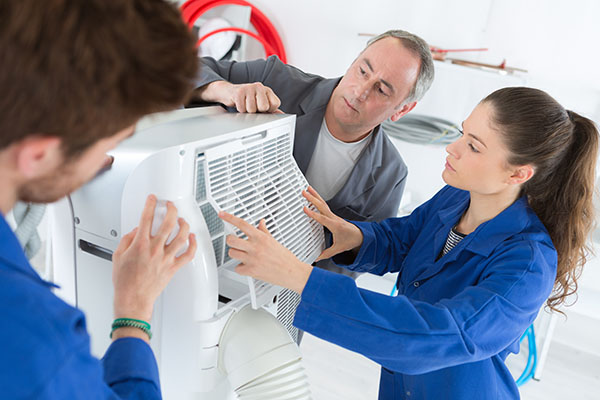
You’ll see a variety of types of HVAC-R systems, ranging from residential to industrial, depending on building size and purpose. (3)
How HVAC-R Works: A Simple Overview
At a basic level, HVAC-R systems work by circulating air and transferring heat:
- Heating systems generate or move heat into a space.
- Air conditioning systems remove heat from indoor air and release it outdoors.
- Refrigeration systems use a closed-loop cycle involving refrigerant, compression, condensation, and evaporation to maintain low temperatures.
If you’re wondering what HVAC-R professionals do, they install, maintain, and repair these interconnected systems to keep homes and businesses operating efficiently.
Common Uses and Settings for HVAC-R
HVAC-R systems are widely used in:
- Homes and apartment buildings
- Office buildings and retail spaces
- Hospitals and healthcare facilities
- Restaurants and grocery stores
- Warehouses and industrial facilities
Because temperature control and refrigeration are widely needed, technicians may have opportunities to work in a variety of settings. (1)
Some students ask whether HVAC-R work is physically demanding. HVAC technicians could possibly work in confined spaces, lift heavy components, and handle potentially hazardous materials. You’ll need a mix of technical troubleshooting skills, physical stamina, and a strong commitment to safety. (1) A structured training program can help you develop these skills one step at a time.
Start Your HVAC-R Career Journey
If you’re ready to move beyond researching what HVAC-R means and start building hands-on skills, the first step is gaining foundational training. Understanding the science of airflow and the mechanics of the refrigeration cycle is what separates a hobbyist from a professional.
At SJVC, our Heating, Ventilation, Air Conditioning, and Refrigeration program is designed to get you started in the field. (4) The program combines classroom theory with the hands-on practice to build real-world technical knowledge.
Start your journey by learning more about SJVC’s HVAC-R program now.
References
- U.S. Bureau of Labor Statistics. “Heating, Air Conditioning, and Refrigeration Mechanics and Installers.”
https://www.bls.gov/ooh/installation-maintenance-and-repair/heating-air-conditioning-and-refrigeration-mechanics-and-installers.htm - CareerOneStop. “Heating, Air Conditioning, and Refrigeration Mechanics and Installers.”
https://www.careeronestop.org/Toolkit/Careers/Occupations/occupation-profile.aspx?keyword=Heating,%20Air%20Conditioning,%20and%20Refrigeration%20Mechanics%20and%20Installers&onetcode=49-9021.00 - O*NET Online. “Heating, Air Conditioning, and Refrigeration Mechanics and Installers (49-9021.00).”
https://www.onetonline.org/link/details/49-9021.00 - SJVC. “Heating, Ventilation, Air Conditioning, and Refrigeration Program.” https://www.sjvc.edu/program/heating-ventilation-air-conditioning-and-refrigeration